Pakistan is in active investment discussions with CATL, the Chinese company that supplies more EV batteries than any other manufacturer on the planet, over potential cooperation in lithium-ion and sodium-ion battery production. The announcement was made by Pakistan's Ambassador to China, Khalil Hashmi, during a meeting with a Chinese business delegation at the Karachi Chamber of Commerce and Industry on May 12, and signals one of the most consequential industrial conversations Pakistan's EV sector has had to date.
If the talks progress beyond intent, a domestic CATL-linked battery supply chain would directly affect the long-term cost of every electric vehicle sold in Pakistan — and shape whether Pakistan becomes a regional manufacturing hub for new-energy vehicles or remains a downstream importer of finished cars.
Background: Why CATL Matters for Pakistan
CATL — Contemporary Amperex Technology Co., Limited — is the world's largest EV battery manufacturer by output, supplying the battery packs that go into vehicles from Tesla, BMW, Volkswagen, Ford, and a long list of Chinese automakers. Its scale matters because batteries are the single largest cost component in any electric vehicle, accounting for roughly a third of the retail price of a typical EV. The buyers and brands that secure CATL supply at competitive rates can price their cars aggressively; the ones that cannot, cannot.
That cost dynamic is exactly where Pakistan currently sits. Every EV on sale in the country today — from the entry-level Alektra Metro at Rs 1.095 million to the MG 4 EV at Rs 6.94 to Rs 8.82 million — relies on imported battery cells. Pakistan has no domestic cell manufacturing capacity. That import dependency is the single biggest reason EV sticker prices in Pakistan sit well above their equivalents in China and India, and it is the reason any serious attempt to bring CATL onshore is a national-scale story rather than a press release.
The talks are situated inside the second phase of the China-Pakistan Economic Corridor, which has shifted from infrastructure (roads, ports, power plants) to industrial cooperation and technology transfer. Ambassador Hashmi framed the CATL conversation in that context, telling the Karachi delegation that Pakistan is positioning itself as a regional hub for advanced battery manufacturing, energy storage, and adjacent industrial production.
What This Means for Pakistani EV Owners
For drivers currently buying or considering an electric car in Lahore, Karachi, or Islamabad, a CATL-Pakistan deal would not change the price of the car sitting in a showroom today. It is a long-cycle industrial play, not a tax credit. But the second-order effects are real.
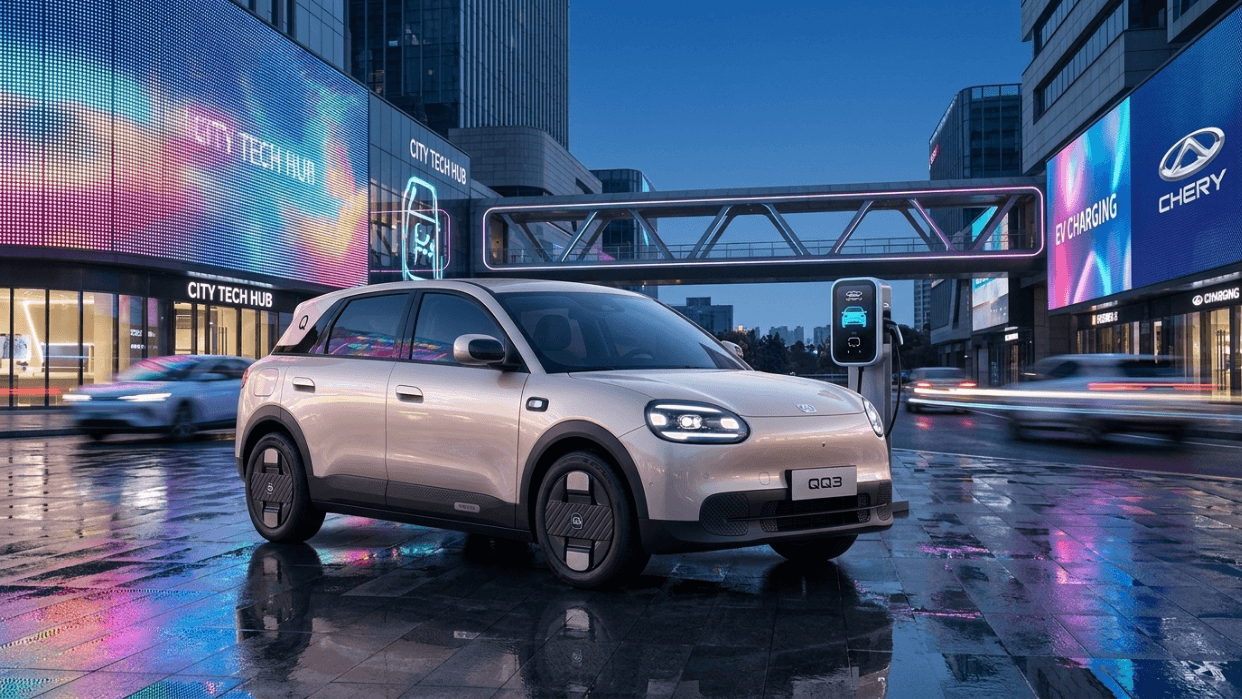
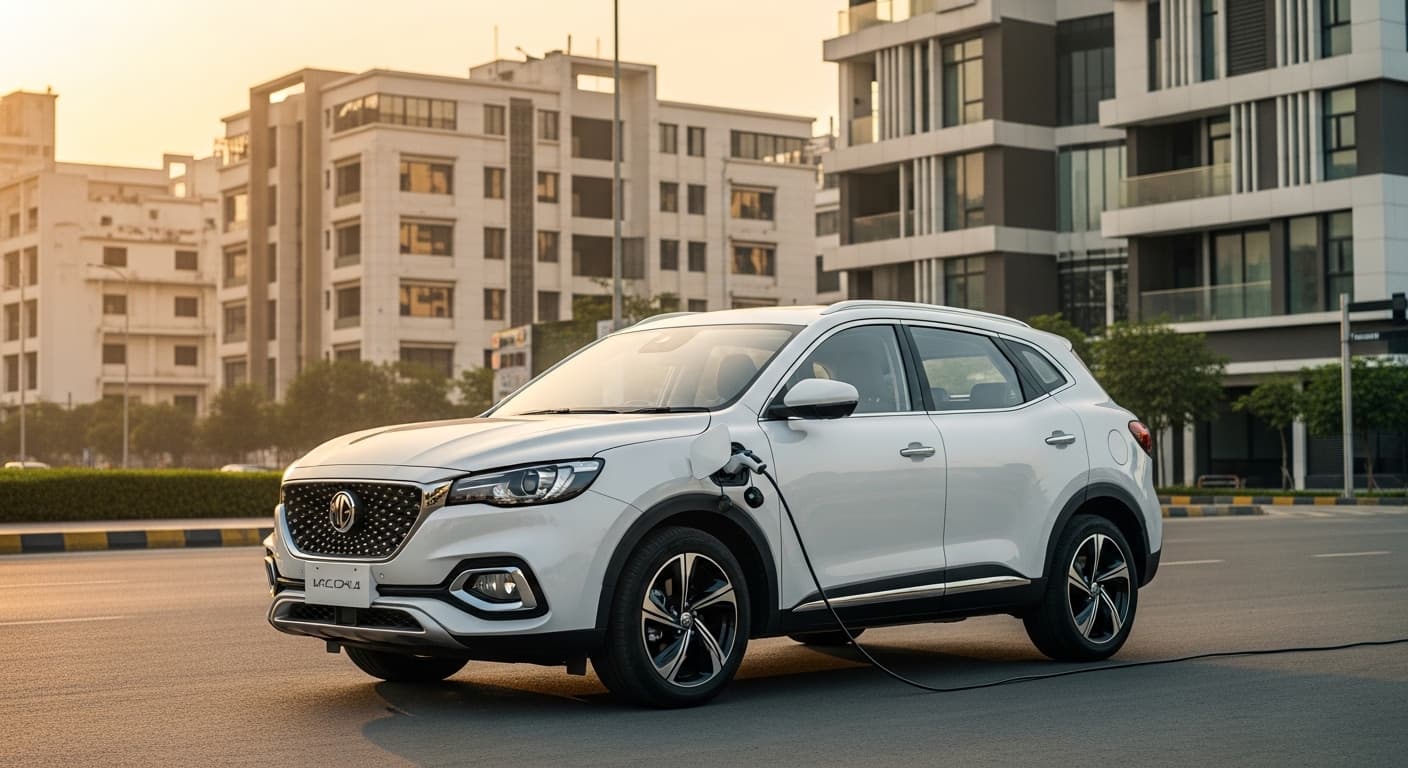
A CATL-anchored local cell supply, if it materialises, would put downward pressure on the cost of every EV that follows. The BYD assembly plant near Karachi, MG Motor Pakistan's expanded lineup, the Chery QQ3 due later this year, and the rumoured launches from Changan and Dongfeng — all of them are pricing models around the current cost of imported battery packs. Replace that import cost with domestic cells, and the entire affordability curve shifts.
There is also a charging infrastructure dimension. CATL is one of the largest manufacturers of grid-scale energy storage systems in the world, and Pakistan's planned rollout of 3,000 public charging stations by 2030 — set against a grid that already struggles with peak demand — will need stationary storage to function reliably at motorway and city-anchor sites. Pakistani EV drivers planning longer trips today can already check the public network via the route planner and live station prices and locations; the next generation of fast chargers will almost certainly be paired with battery storage at the site level.
Key Details and Numbers
Based on Ambassador Hashmi's statements to the Karachi Chamber and the broader context of the talks, the relevant facts are:
- Counterparty: CATL — Contemporary Amperex Technology Co., Limited — the world's largest EV battery manufacturer by output.
- Technologies under discussion: Both lithium-ion (the dominant current chemistry) and sodium-ion (an emerging chemistry that is cheaper, more abundant, and better suited to entry-level EVs and stationary storage).
- Pakistan's stated advantage: Ambassador Hashmi described Pakistan as having "abundant raw materials" relevant to battery production, and flagged a "first-mover advantage" in sodium-ion specifically.
- Framework: Second-phase CPEC, focused on industrial cooperation and technology transfer rather than infrastructure.
- Bilateral baseline: Over 300 MOUs and 36-plus joint ventures signed between Pakistan and China in the past two years, valued at more than US$13 billion. Roughly 30 per cent of MOUs convert into operational ventures.
- Next milestone: Prime Minister Shehbaz Sharif's upcoming visit to China, which the ambassador identified as the venue where "concrete developments may emerge".
- Current status: Talks are at the investment-cooperation discussion stage. No facility location, no capacity target, no investment figure, and no timeline have been announced.
The sodium-ion angle is worth pausing on. Sodium-ion cells use sodium — abundant, cheap, and not subject to the same supply-chain bottlenecks as lithium — in place of lithium in the cathode. Energy density is lower than current lithium-ion chemistries, which makes sodium less suited to long-range premium EVs, but cost and thermal stability are better, which makes it well suited to entry-level urban EVs and stationary grid storage. Both of those segments are exactly where Pakistan's EV adoption is heaviest. If Pakistan secures a first-mover position in sodium-ion manufacturing, that is a structural advantage rather than a marketing line.
What Happens Next
The immediate near-term marker is the Prime Minister's China visit. Pakistan's pattern with high-value Chinese industrial agreements has been to use head-of-government visits as the formal signing venue, with the working-level negotiation completed in advance. If a CATL announcement is going to happen, it will most likely happen there.
In parallel, the regulatory groundwork is already in motion. The New Energy Vehicles Policy 2025-30 sets out the federal framework for EV manufacturing incentives, and the EV Charger Regulations 2026 — jointly overseen by the Ministry of Industries and Production, NEECA, the Ministry of Energy, NEPRA, and the distribution companies — define the tariff and licensing structure that any battery-storage-anchored charging operation would need to slot into. A CATL investment would not require a new policy; it would land inside one that has already been written for it.
The wider Pakistan EV calendar is dense over the next month. The Pakistan Electric Vehicle Expo 2026 runs May 15 to 17 at the Lahore Expo Centre, where BYD, MG, and a long list of two- and three-wheeler manufacturers are expected to make announcements. Whether the CATL conversation generates news during the Expo window depends on the pace of the diplomatic track — but the topic is now firmly on the agenda.
Is CATL building a factory in Pakistan?
No. As of May 14, 2026, CATL and Pakistan are in early-stage investment cooperation talks. No factory location, capacity, or timeline has been announced. The conversation was disclosed by Pakistan's Ambassador to China, Khalil Hashmi, at the Karachi Chamber of Commerce on May 12.
How would a CATL deal affect EV prices in Pakistan?
Battery cells account for roughly a third of the retail price of an EV. Pakistan currently imports all of its EV cells, which is a major reason EVs sell here at a premium versus China or India. If CATL eventually localises cell production in Pakistan, the cost floor for every EV that uses CATL cells — directly or through assemblers like BYD — would fall. The effect would not be immediate; cell plants take years to come online.
What is sodium-ion battery technology and why does it matter for Pakistan?
Sodium-ion batteries use sodium instead of lithium in the cathode. They are cheaper to produce, less constrained on raw materials, and more thermally stable, but offer lower energy density than current lithium-ion cells. That trade-off makes sodium-ion well suited to entry-level urban EVs and stationary grid storage — both areas where Pakistan has significant demand. The technology is still in early commercial deployment globally, which is why Ambassador Hashmi described Pakistan as having a "first-mover advantage".
When will Pakistanis see results from the CATL talks?
The next concrete milestone is Prime Minister Shehbaz Sharif's upcoming visit to China, identified by Ambassador Hashmi as the likely venue for any formal announcement. Even in a best-case scenario, a manufacturing facility would take three to five years to plan, build, and reach commercial output. Any near-term effect on Pakistani EV pricing would come through related Chinese assembly investment rather than direct cell production.
Does this affect Pakistan's current EV charging network?
Not in the short term. The existing public charging network — anchored by PSO HUBCO Green, Shell Recharge, and motorway-corridor operators — runs on imported equipment and grid power. A CATL-anchored battery storage capability would primarily affect the next generation of high-power motorway sites, where stationary storage will be needed to support sustained fast-charging loads without overloading the grid.